How to Insure a Restomod Land Cruiser: A Classic Car Insurance Guide?

A restomod Land Cruiser needs a classic or collector car insurance policy with agreed value coverage, not a standard auto policy. Standard insurers base payouts on depreciated market value, which rarely reflects the cost of a frame-off restoration or an LS3 engine swap. Owners should work with an insurer that specializes in modified classics, document every upgrade, and set an agreed value before the policy starts. This guide walks through the process step by step.
Toyota Land Cruiser restomods sit in an odd spot for most insurance companies. The body reads as a vintage FJ60 or FJ62, but the drivetrain, suspension, and electronics underneath look nothing like the factory build sheet. That gap causes real problems when it comes time to file a claim.
How to Insure a Restomod Land Cruiser?
The first step in learning how to insure a restomod Land Cruiser is understanding the difference between actual cash value and agreed value coverage. Actual cash value policies pay out based on depreciation, which almost always falls short of what a restomod build actually costs. Agreed value policies lock in a specific dollar amount that both the owner and insurer accept in advance.
Specialty insurers such as Hagerty, Grundy, and American Modern Insurance write these agreed value policies for modified vehicles. They ask for photos, receipts, and a build history before quoting a price. Owners who worked with a shop for their Land Cruiser restoration usually have most of this paperwork already on file. They also might ask for an appraisal of the vehicle, in which most builders should be licensed and accredited to appraise vehicles.
Mileage limits matter too. Most classic car policies cap annual mileage between 2,500 and 7,500 miles and expect the vehicle to be garaged when not in use. A restomod driven daily as a commuter may not qualify for these lower rates, so owners should be honest about intended use when they apply.

Why Documentation From an LS3 - LT1 Build Affects Your Premium?
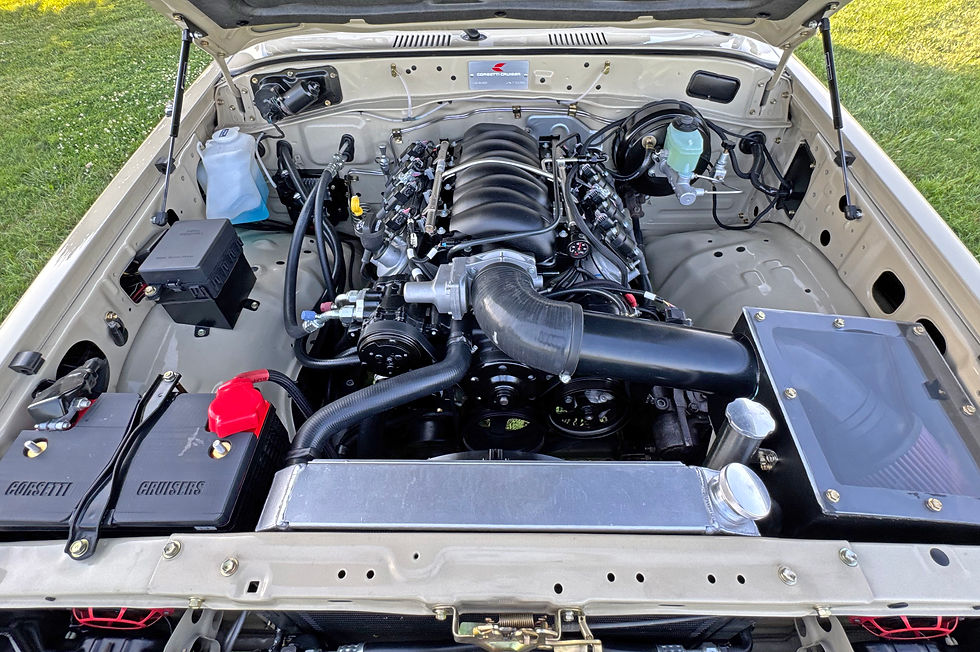
Insurers price risk based on what they can verify. A build sheet listing the exact engine, transmission, and suspension components gives an underwriter confidence in the vehicle's actual value. Owners who chose a stage 2 LS3 restoration benefit from having invoices, part numbers, and dyno sheets that support a higher agreed value.
Photos matter as much as paperwork. Before-and-after images from a frame-off restoration show an appraiser exactly what changed and why the vehicle costs more to replace than a stock FJ62. Keep digital copies of every receipt, from paint codes to wiring harness upgrades.
Different From a Stock Classic in the Eyes of Insurers?
A stock FJ60 or FJ62 has a known market range that appraisers can look up. A restomod does not fit that mold because two builds with the same donor chassis can carry wildly different values depending on the drivetrain and interior work involved.
This is why generic online quote tools rarely work for restomods. An owner who bought their vehicle through Corsetti Cruisers inventory or commissioned a custom build should request a manual underwriting review instead. A specialist agent can factor in the engine swap, upholstery, and any suspension or lift work that adds to the replacement cost.
Warranty status also plays a role here. Some engine swap warranties carry conditions that affect how a claim gets processed, so it helps to understand what voids coverage during restomod work before filing anything with an insurer.
Steps to Get Your Restomod Land Cruiser Properly Insured
Getting the right policy takes a bit more legwork than a standard car insurance quote, but the process follows a predictable path.
First, gather every receipt and photo from the build. Second, get a written appraisal from a shop familiar with restomods or an independent classic car appraiser. Third, request quotes from at least two or three specialty insurers rather than a single generalist provider. Fourth, confirm the agreed value in writing before the policy becomes active, and review it every year as market values shift.
Owners who skip the appraisal step often find themselves underinsured after an accident. A five-figure engine swap and a full interior redo can push a build's value well past what a quick online estimate suggests, so a proper appraisal protects the investment.
Common Mistakes Owners Make With Restomod Coverage
Many owners assume their homeowner's or standard auto policy will cover a Land Cruiser build without ever reading the fine print. Standard policies often exclude modifications entirely or cap payouts at a low flat rate regardless of what was actually spent.
Another common mistake involves storage requirements. Some classic car policies require a locked garage and will deny a claim if the vehicle sat outside during a storm or theft. Owners should read these clauses carefully and match their storage habits to the policy terms.
Underestimating the vehicle's value is just as risky as overestimating it. A build based on a well-preserved chassis, like those detailed in a buyer's guide for FJ60s, can carry more value than owners expect once labor and parts costs are added up.
Working With a Shop That Understands Restomod Value
A restoration shop that keeps detailed build records makes the insurance process far easier. Every invoice, part number, and photo becomes part of the paper trail an insurer needs to set a fair agreed value.
This is one reason owners considering a restomod build should ask upfront how their chosen shop documents the work. A shop that provides a full build book at completion saves the owner hours of back-and-forth with an underwriter later.
How Rising Land Cruiser Values Affect Your Policy?
The market for restored Land Cruisers has moved quickly over the past few years, and that shift changes what owners should expect from a policy. A vehicle insured for a modest amount three years ago may now be worth far more once parts, labor, and demand are factored in.
Reviewing an agreed value policy every year keeps coverage in line with reality. Owners who follow Land Cruiser market value trends can spot when it makes sense to request a new appraisal rather than assume last year's number still applies.
Insurers also pay attention to how a build compares against similar vehicles sold recently. A well-documented restomod, especially one built around a desirable chassis like an FZJ80 or FJ62, tends to hold value better than a vehicle with an unclear history, which supports a stronger claim if the vehicle is ever damaged or stolen.
How Storage and Usage Habits Change Your Rate?
Insurers ask detailed questions about where a vehicle sleeps at night and how often it leaves the driveway. A Land Cruiser stored in a locked garage and driven only on weekends usually qualifies for lower rates than one parked on the street and used for daily errands.
Owners should be upfront about these habits rather than guessing at the categories on an application. A mismatch between stated use and actual use can void a claim entirely, leaving the owner to cover repair costs out of pocket after paying premiums for years.
Some insurers offer a middle-ground option for restomods that see regular but limited use, such as weekend trips or seasonal driving. Asking directly about these tiers during the quote process often turns up options that a standard online form does not show.
Questions to Ask an Insurance Agent Before You Buy a Policy
A short conversation with an agent before signing anything can prevent costly surprises later. Owners should ask how the agreed value gets set, whether it can be adjusted after major upgrades, and what documentation the insurer expects if a claim gets filed.
It also helps to ask how the policy treats parts and labor during a claim. Some policies use current retail prices for replacement parts, while others use a formula based on the vehicle's age that may not reflect the actual cost of sourcing rare Land Cruiser components.
Finally, ask whether the policy covers the vehicle during transport, such as a trip to a car show or a trailer haul to a track day. Restomod owners who attend events regularly need this detail confirmed in writing rather than assumed.
Final Thoughts on Insuring Your Restomod
Insuring a restomod Land Cruiser takes more planning than a standard car insurance policy, but the process protects an investment that often runs into six figures once the engine swap, suspension, and interior work are added together. Owners who document their build, choose a specialty insurer, and set an accurate agreed value avoid the disappointment of being underpaid after a loss.
If you are building or buying a restomod Land Cruiser and want a build history that insurers trust, reach out to Corsetti Cruisers to talk through your project and see what documentation we provide with every restoration.


