Land Cruiser 60 Series: The Complete Buyer's Overview

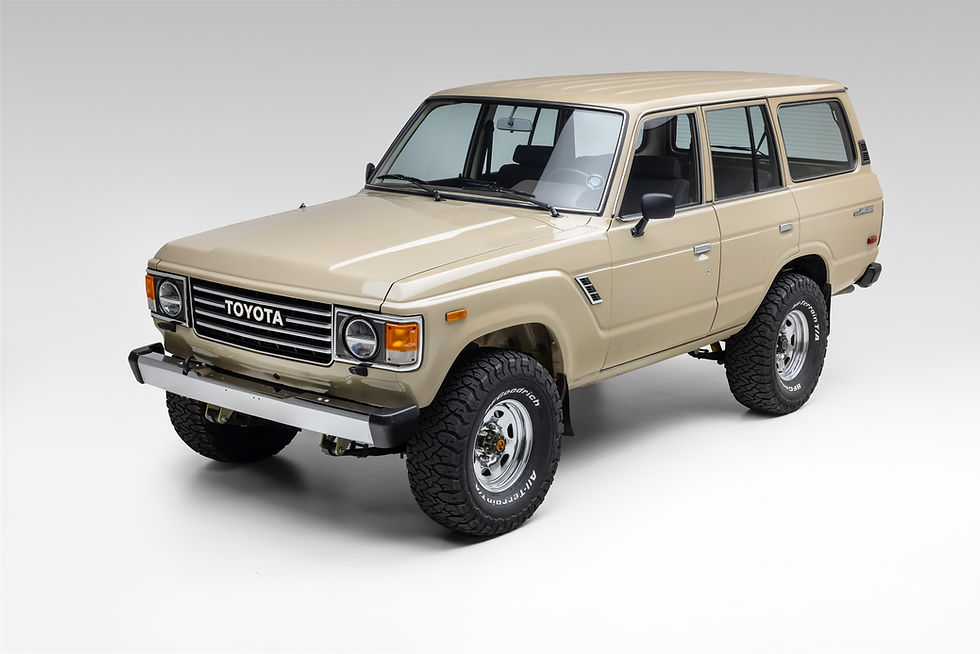
The Toyota Land Cruiser 60 Series, built from 1980 to 1990 as the FJ60 and FJ62, is one of the most collectible off-road wagons Toyota ever produced. Buyers should look for a rust-free frame, an intact smog system, and a compression test on the original engine before purchasing. Prices for clean examples now range from $20,000 to $95,000, with restored or V8-converted trucks commanding significantly more. Corsetti Cruisers works with these platforms daily and sees the same handful of issues come up again and again, which is exactly why a focused buyer's overview matters before you hand over a deposit.
If you are shopping for a 60 Series Land Cruiser right now, you already know these trucks are getting harder to find in good condition. Supply is shrinking every year, prices keep climbing, and the difference between a smart buy and an expensive mistake usually comes down to a handful of details most casual shoppers never check.
Land Cruiser 60 Series: The Complete Buyer's Overview
The 60 Series replaced the utilitarian FJ55 wagon and turned the Land Cruiser into something closer to a family SUV. Toyota added power steering, factory air conditioning, and a more comfortable cabin without giving up the part-time four-wheel drive system and leaf-spring durability the nameplate was known for.
Two variants matter here. The FJ60 ran from 1981 to 1987 with the carbureted 2F inline-six, while the FJ62 arrived in 1988 with the fuel-injected 3F-E and an available automatic transmission. Both share the same body and frame, so the engine bay and drivetrain are really what separate them.

Anyone doing serious research into a Land Cruiser restoration quickly learns that condition matters far more than mileage on these trucks. A well-maintained 200,000-mile FJ60 is often a better buy than a low-mileage truck that sat outside for a decade.
FJ60 vs FJ62: Choosing the Right 60 Series
The FJ60's 2F engine is simple, tough, and known to run past 300,000 miles with basic maintenance. Its downside is the carburetor, which tends to need a rebuild and can be finicky to keep synced with the factory smog equipment.
The FJ62 solves the carburetor headache with fuel injection and adds a smoother automatic transmission option, but it also brought more electronics into the cabin, which means more things that can eventually fail. Neither engine is fast, and both top out around 65 mph on the highway.
If you plan to keep the drivetrain original, the FJ62 is usually the easier daily driver. If you are buying with a future engine swap in mind, the FJ60's simpler platform gives you more room to work with.
Common Problems to Check Before You Buy

Rust is the single biggest factor in 60 Series values, and it hides in predictable places. Check the roof rain gutters, the rocker panels, the rear quarter panels, the bottom of the tailgate, and especially the frame rails and rear shock towers. HERE are the top 7 spots to look for on an FJ60/62.
A magnet is a cheap and effective tool for finding bondo hiding rust repairs. If a seller gets nervous when you pull one out, that tells you something on its own. Frame rust is the most expensive problem to fix and the one that should end negotiations fastest.
Beyond rust, ask about the smog system on FJ60s specifically, since a missing or disabled component can turn into a surprisingly expensive repair. A pre-purchase inspection from a shop that specializes in this platform, like anyone offering dedicated FJ62 restoration services, will catch issues a general mechanic might miss.
Restomod and Engine Swap Options for the 60 Series
Original engines are charming, but plenty of buyers today want a 60 Series that can keep up with modern traffic. This is where V8 conversions come in, and they have become one of the most popular upgrades in the community.
A properly executed Land Cruiser motor swap replaces the factory six-cylinder with a modern crate engine, usually paired with an updated automatic or manual transmission and new supporting components like the radiator, alternator, and wiring harness. Done right, it transforms drivability without erasing the truck's character.
This isn't limited to the 60 Series either. The same conversion philosophy shows up in builds on the earlier 1971 FJ55 and even outside the Land Cruiser family entirely, with shops applying similar techniques to International Scout II restomods.

LS3 V8 Conversions and Modern Drivetrains
The LS3 V8 is the most common swap choice because it is affordable, well-supported, and dramatically more powerful than anything Toyota offered on this platform. A finished conversion, like the work shown on this LS3 V8 build, typically pairs the engine with a 6L80 automatic or an H55 five-speed manual.
Buyers who want a more traditional feel sometimes go a different direction entirely, opting for a manual gearbox setup similar to this FJ62 five-speed conversion. Either path gets you a truck that drives like a modern vehicle while keeping the boxy silhouette that makes the 60 Series so recognizable.
Final Thoughts
The Land Cruiser 60 Series rewards patient buyers who prioritize rust-free bodies and honest mechanical history over flashy listings. Whether you land on an FJ60 for its simplicity or an FJ62 for its fuel injection, the inspection process is the same: check the frame, test compression, and confirm the smog system is intact.
If you're evaluating a specific truck or already own one that needs work, reach out to a shop that restores these platforms every day. Corsetti Cruisers can walk you through inspection, restoration tiers, and engine swap options so you buy with confidence instead of guesswork.

If you want more information feel free to call the shop or email us directly.


